
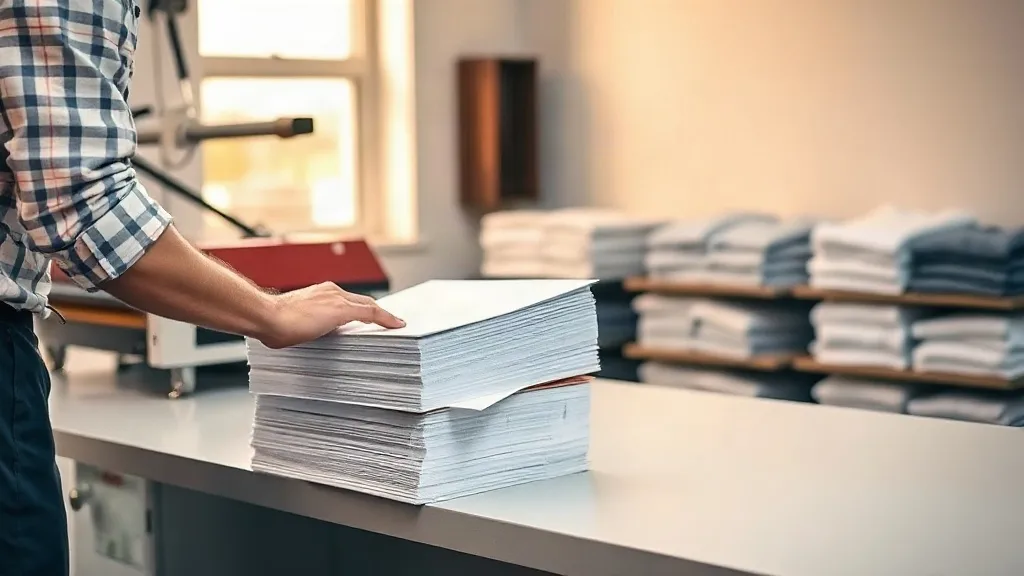
Most print shops start their dtf transfers journey by ordering from whoever shows up first in a search bar, usually a large online supplier three time zones away. That works until a job needs a reprint the day before a customer pickup, or a rush order of 40 team jerseys lands on a Thursday with a Saturday deadline. At that point, the question shifts from "who has the best price" to something more practical: who can get film into your hands today. That is where local sourcing starts to matter, and it is a conversation worth having before the pressure hits.
Why Local Sourcing Changes the Math for a Small Shop
The economics of dtf printing are usually framed around ink cost per square meter and powder consumption. Those numbers matter, but they miss a cost that shows up on every rush job: waiting. A supplier two states away adds three to five business days to every order, and that window has to be built into your quote, your customer promise, and your production schedule. When you can drive twenty minutes and pick up film the same afternoon, the entire workflow loosens up.
There is a second, quieter benefit. Local pickup lets you inspect a print before it goes on a garment. You can hold a transfer up to the light, check for banding in a gradient, and confirm that fine text didn't fill in. With a remote supplier, you discover those problems after the film is already on a shirt and the customer is already gone.
The hidden cost of shipping delays
Consider a realistic scenario. A local gym orders 60 hoodies with a two-color chest logo. You quote a ten-day turnaround and order transfers from an online supplier with a stated four-day production window. On day five you get an email: one color was out of stock, production is delayed two days. Now you are calling the gym to explain a schedule slip that has nothing to do with your press. Multiply that across a month of orders and the lost goodwill starts to outweigh whatever you saved on the per-print price.
When local pickup actually loses
It is worth being honest here: local sourcing is not automatically better. If your shop runs high volume on standard designs and you have reliable lead times from a national supplier, bulk pricing and consistent film quality may beat the convenience of a local pickup. The right answer depends on your order mix. Shops doing a lot of small runs, one-offs, and same-week deadlines tend to benefit most from having a local option in the rotation.
How to Vet a Local DTF Supplier Before You Commit
Anyone with a printer and a heat press can call themselves a DTF supplier. Sorting the serious operations from the hobbyists takes a few specific questions, and most of them can be answered in a single phone call or a short visit.
Ask about film and powder brands, not just price
A supplier who cannot tell you which film and powder they run is either reselling someone else's output or hasn't thought about it. Film thickness and coating quality affect how cleanly the transfer releases, and powder grade affects stretch and wash durability. A shop that knows its materials will usually volunteer the details.
Request a sample print of your own artwork
Never judge a supplier by a demo print of a stock design. Send a file with the kind of detail your customers actually order: small type, a gradient, a thin outline. Then press it yourself and wash it. One test garment tells you more than a dozen testimonials.
Confirm turnaround in writing
"Same day" means different things to different people. Ask specifically: if I send a file at 10 a.m., when is the film ready for pickup? Get that in a text or email so there is a record. Suppliers who are vague about turnaround are usually vague about everything else.
- Ask whether they print in-house or broker to another shop.
- Check if they offer gang sheets so small orders stay affordable.
- Confirm whether they can handle rush orders and what the surcharge is.
- Find out if they will hold film for pickup or only ship.
Planning Your Week Around Pickup Instead of Shipping
Once you have a local supplier, the production calendar changes shape. Instead of batching orders to hit a shipping minimum, you can send files in smaller groups and pick up as you go. That flexibility is worth building a routine around.
A simple weekly rhythm
Many shops settle into a pattern: send all Monday and Tuesday files on Tuesday afternoon, pick up Wednesday morning, press through Wednesday and Thursday, and leave Friday for reprints and rush work. The gap between file submission and pickup becomes your buffer for catching errors, and it costs nothing because the film never sat in a delivery truck.
Keep a reprint file ready
When pickup is fast, reprints stop being a crisis. Keep a folder of the files you sent that week, organized by customer, so a damaged transfer or a mis-sized print can be reordered without digging through email. Shops that do this consistently report far less panic on deadline days.
What to Check When You Pick Up Film
The pickup itself is a quality control step, and treating it as one saves headaches later. A quick inspection takes under a minute per sheet.
- Hold the film at an angle under good light and look for banding or streaks.
- Check fine text and thin lines for fill-in or dropout.
- Confirm the print size matches what you ordered, especially on gang sheets.
- Look at the powder coverage: it should be even, with no bare patches or clumps.
- Count the sheets before you leave the counter.
If something looks off, flag it on the spot. Most local suppliers would rather reprint a sheet than lose a repeat customer, and catching it at the counter is far easier than explaining it after a garment is finished.
Is a Local Supplier Worth It for Your Shop?
Searching for dtf transfers near me is really a search for control: control over turnaround, over quality checks, and over the conversations you have with customers when something goes sideways. For shops with a steady stream of small and mid-sized orders, that control is often worth more than a few cents per print. For high-volume operations with predictable designs, a hybrid approach, local for rush and online for bulk, tends to make the most sense.
The practical move is to test one local supplier with a small order this week. Send a file with real detail, pick it up, press it, and wash it. The result will tell you more about whether local sourcing fits your shop than any comparison chart ever could.
Frequently Asked Questions
How much does local pickup usually save compared to shipping?
It depends on order size and distance, but the savings usually come from two places: shipping fees on small orders and the labor cost of tracking and receiving packages. For a shop placing several small orders a week, pickup can also reduce waste because you order closer to actual demand instead of batching to hit a shipping minimum.
Can I get same-day DTF transfers from a local supplier?
Some local shops offer same-day or next-morning pickup on small orders, but it varies widely. Ask specifically about file cut-off times and whether rush service carries a surcharge. Same-day availability is usually limited to standard gang sheets rather than large custom runs.
What should I bring when picking up DTF transfers?
Bring your order confirmation and a way to check sizes, like a tape measure or a printed reference sheet. If you are picking up gang sheets, bring the original file layout so you can confirm placement matches. A clean, flat folder or portfolio keeps film from creasing on the drive back.
Is it better to use one local supplier or several?
Having a primary supplier and a backup is usually smarter than spreading orders thin across many shops. A primary gets to know your files and preferences, which improves consistency, while a backup covers you during stock shortages or vacation closures. Two reliable relationships beat five loose ones.